November to February is a popular window for an Andaman trip, with October and March–May also worth considering. Seasonal weather is a planning guide, not a guarantee of calm seas or a complete ferry timetable. In monsoon months, allow extra flexibility and check current operator and port notices.
That’s the one-line answer every other guide gives you. The harder question — the one that actually decides your trip — is when do the ferries run, when do they fall apart, and when do prices peak? That’s what this guide covers.
BookYourFerry compares available private sailings between Port Blair, Havelock and Neil. This guide separates seasonal planning advice from dated inventory: verify your exact route, date and total before booking.
Best Time to Visit Andaman: At a Glance
| Window | Planning considerations | Ferry check |
|---|---|---|
| Nov–Feb | Popular holiday period; search early for fixed dates | Confirm the actual operator mix and final price |
| Oct, Mar–May | Consider forecast, heat and holiday dates | Do not assume every operator runs every day |
| Jun–Sep | Monsoon can disrupt crossings | Check notices and retain buffer days |
Quick planning rule: Choose dates that allow a flexible island itinerary. This guide does not verify a fixed peak surcharge, year-round flat fares or a universal sell-out deadline.
Our sea-conditions guide describes historical regional wave observations and their limitations. Those observations are not a forecast for your route or a guarantee of a calm crossing in any month.
Compare ferry prices and check live availability at BookYourFerry.com
Peak Season (October–May): The Sweet Spot
October to May is the main visitor season. Temperatures are generally warm, and ferry operators publish more inventory than during the monsoon period. The exact operator mix and schedule still vary by travel date.
Ferries sell out fastest in these months — check the dated Andaman ferry schedule and search live tickets early for fixed travel dates.
Operators do not publish directly comparable audited punctuality rates, so avoid relying on precise percentages. Weather and operational changes can still affect a sailing. About 80 minutes into a fast PB→Havelock crossing, the deep blue of the open Bay gives way to shallower turquoise water, and Havelock appears as a lush green silhouette through the windows when visibility is good.
For December and January holiday travel, start comparing once your dates are fixed. Final prices and inventory can differ by departure and class; do not assume a fixed Makruzz surcharge or flat Nautika and Green Ocean fares.
Check what is actually bookable
A feed check on 2 September for travel on 15 October 2026 returned Makruzz, Nautika and Green Ocean sailings on the Port Blair–Havelock route; ITT Majestic returned no sailing for that date. This dated observation does not establish a season-long timetable. Check the schedule snapshot and live search for your date.
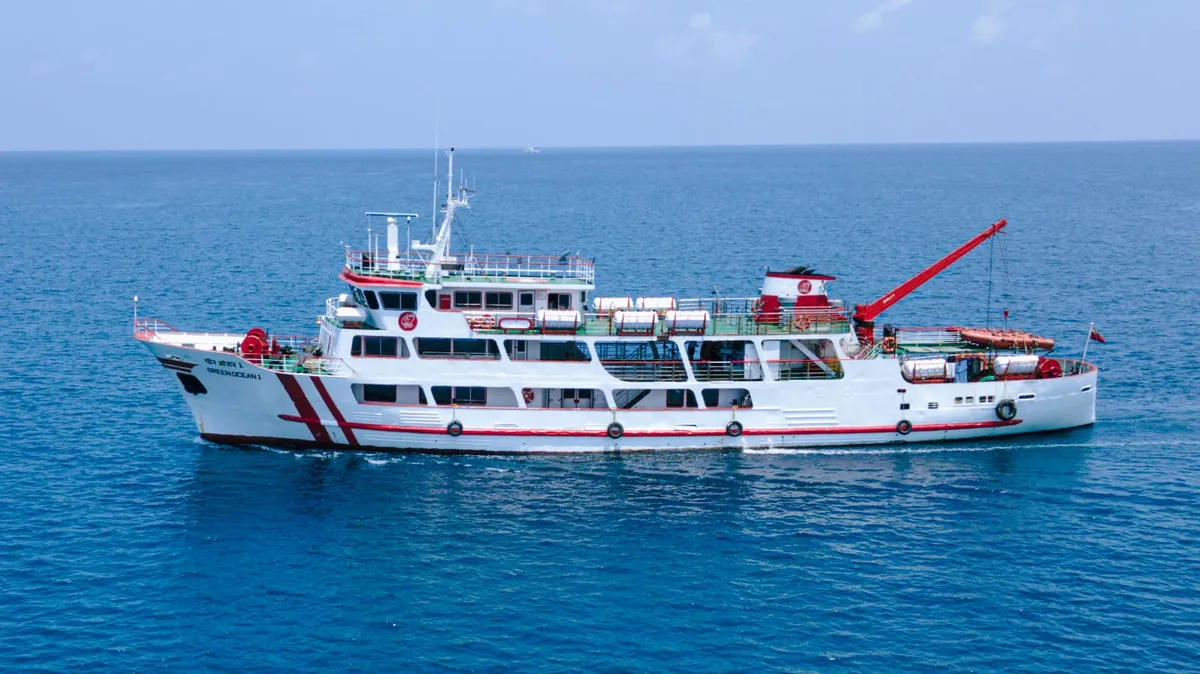
If you want the open-deck experience on Green Ocean 1 — the only private ferry in the Andamans where you can stand outside, feel the wind, and photograph flying fish — peak season is when the deck is genuinely usable. In monsoon, they often close it for safety.
Monsoon Season (June–September): What Actually Happens
Monsoon doesn’t shut down ferry travel, but it disrupts it. Heavy rain comes in bursts (not the continuous downpour many travelers picture), and the sea goes from glassy in peak season to genuinely lively by July-August. That’s when operators start consolidating and cancelling afternoon runs.
Rough-season crossings are when seasickness hits hardest — our ferry seasickness guide covers prevention.
Most “best time to visit Andaman” guides treat June-September as a flat “don’t go” zone. That’s wrong. Monsoon Andaman has its own appeal — empty beaches, lush green forests, 5-star villas at mid-range prices, dramatic skies, and almost no other tourists. But you have to plan around the ferry reality, and that’s where the operator-specific picture matters.
Monsoon ferry behaviour
No comparable audited cancellation-rate dataset is available for these operators in this guide. Vessel deployment, weather and port clearance can affect any departure. Check government services separately with DSS/STARS rather than assuming they will operate when private services cannot.
Our own booking data shows how sharply demand shifts: across June–September 2025, bookings on BookYourFerry averaged about a quarter of their peak-season monthly level, and the legs to and from Neil Island fell furthest. The Andaman ferry seasonal patterns study has the route-by-route figures and method.
The monsoon ferry rules
Sea conditions vary from sailing to sailing. Travelers concerned about motion sickness should discuss suitable precautions with a doctor or pharmacist.
If you do travel June-September, three things make the difference between a smooth trip and a stranded one:
- Choose available sailings with recovery time. A morning departure may leave more of the day for alternatives, but no departure is guaranteed.
- Pad your itinerary with 2 buffer days. If you’re flying out of Port Blair on a fixed date, treat the day before your flight as a no-ferry day. Don’t schedule a Havelock-to-PB ferry on flight day. We see this mistake every monsoon — travellers stranded on Havelock with a missed flight
- Read the actual ticket conditions. For BYF bookings, the published policy offers a full refund including fees or free rescheduling for operator cancellations due to weather or technical reasons. Ask support about processing time and replacement availability; do not assume the same conditions for operator-direct bookings.

Andaman Month-by-Month: Weather, Crowds & Ferry Reality
This is the section every other guide skips. Here’s what each month actually looks like — temperature, sea conditions, ferry status, and one specific tip for that month.
Fares shift with season too — current rates are in our Andaman ferry prices guide.
January
Weather: 22-28°C, dry, very pleasant. Coolest month of the year, low humidity. Sea conditions: Calm, ideal for diving and water sports. Ferries: Check released departures for your date; weather and operational changes remain possible. Crowds: Highest of the year through mid-January. New Year tail. Tip: Search once holiday dates are fixed and confirm every leg; no fixed booking lead time guarantees availability.
February
Weather: 23-29°C, dry, calm seas. Perhaps the most pleasant month overall. Sea conditions: Best dive visibility of the year (15-25 meters at popular sites). Ferries: Check released departures for your date; weather and operational changes remain possible. Crowds: Heavy in first half (Valentine’s week), thinning by month-end. Tip: Late February is the best week of the year for honeymoons — peak weather, post-peak prices, dive-perfect water.
March
Weather: 25-31°C. Starting to warm but still comfortable. Sea conditions: Calm, excellent for snorkelling at Elephant Beach and Bharatpur. Ferries: Check released departures for your date; weather and operational changes remain possible. Crowds: Light. School holidays push families through, but smaller numbers than Dec-Jan. Tip: Compare actual ferry and accommodation quotes instead of assuming a seasonal percentage saving.
April
Weather: 27-33°C. Hot midday, but morning and evening pleasant. Sea conditions: Calm seas, warm water (28-29°C — the warmest of the year). Ferries: Check released departures for your date; weather and operational changes remain possible. Crowds: Light. School-holiday spike late April. Tip: Skip Green Ocean’s open deck after 11 AM — it gets brutal. The midday DJ session is a different experience when it’s 33°C and humid.
May
Weather: 28-34°C, humid. Pre-monsoon — occasional thunderstorms in the second half. Sea conditions: Mostly calm, but cyclone risk increases in late May. Ferries: Check released departures for your date; weather and operational changes remain possible. Crowds: Light, last month before monsoon. Tip: First two weeks of May are the last reliable peak-season window. From May 20 onwards, watch the cyclone forecast — pre-monsoon systems can disrupt ferries.
June
Weather: 26-30°C, monsoon arrives. Heavy rain in bursts. Sea conditions: Swells building, 2-3 meters typical. Ferries: Check released departures for your date; weather and operational changes remain possible. Crowds: Very low. Resorts at off-season pricing. Tip: Build buffer time before flights and check operator notices. No specific morning service is guaranteed.
July
Weather: 25-29°C, peak monsoon. Highest rainfall of the year. Sea conditions: Roughest of the year — the bumpiest crossings of the calendar. Ferries: Check released departures for your date; weather and operational changes remain possible. Crowds: Very low. Most resorts close non-essential services. Tip: Check current DSS/STARS tourist availability and release notices if considering a government ferry.
August
Weather: 25-29°C, monsoon peak continues. Slightly less rainfall than July. Sea conditions: Still lively, easing through the month. Ferries: Check released departures for your date; weather and operational changes remain possible. Crowds: Very low. Tip: Sundarbans of the south. If you do travel, focus on Port Blair and the immediate islands — limit inter-island moves.
September
Weather: 26-30°C. Monsoon retreating in the second half. Sea conditions: Calming after mid-September. Ferries: Check released departures for your date; weather and operational changes remain possible. Crowds: Low — the smart traveller’s window. Tip: Check forecasts and released inventory before committing to a shoulder-season itinerary.
October
Weather: 26-31°C, post-monsoon. Comfortable, occasional showers early in the month. Sea conditions: Calm by mid-October. Ferries: Check released departures for your date; weather and operational changes remain possible. Crowds: Light to moderate, building toward Diwali. Tip: Target October 10-25 for the best weather-to-price ratio of the year.
November
Weather: 24-29°C. Often the best month overall — cool, dry, calm. Sea conditions: Excellent. Ferries: Check released departures for your date; weather and operational changes remain possible. Crowds: Moderate, building rapidly through the month. Tip: Compare your preferred November dates early, but confirm actual prices and departures rather than assuming no surcharge.
December
Weather: 22-28°C, dry, the start of peak weather. Sea conditions: Calm, dive-perfect. Ferries: Check released departures for your date; weather and operational changes remain possible. Crowds: Heavy from Dec 18 onwards. Christmas-NYE peak. Tip: Book early December if you want peak weather without peak crowds. Dec 1-15 is significantly less crowded than Dec 20-31, with the same weather.
Best Time to Visit Andaman for Honeymoon

Havelock is the honeymoon anchor — see the complete Havelock Island guide for beaches and stays.
The best time to visit Andaman for a honeymoon is late February to mid-March — peak weather, post-peak prices, calm seas, and resort availability your December-honeymoon counterparts can’t get.
December through February is the marketing-popular honeymoon window, but it overlaps with peak family travel and school holidays. Late February empties out fast, and mid-March is the under-the-radar honeymoon month where you can negotiate better resort rates while still getting glassy seas.
For the ferry side, Nautika Pro Business Class is one premium option. Its live fare, sailing time and listed amenities can change, so compare the seat map and booking results for your date rather than relying on a fixed package description.
If diving is part of the plan: November-April is dive season, with peak visibility from January through March. The deeper sites around Havelock (Nemo Reef for clownfish, Aquarium for big fish) are at their best in this window.
Plan your Andaman honeymoon ferry trip at BookYourFerry.com — compare all 4 operators in one place
Best Time to Visit Andaman with Family
For families, the best time is late October to mid-December or mid-February to mid-March. The reason isn’t weather — it’s ferry experience.
Children handle calm seas. They struggle with rough crossings, loud music, packed terminals, and 90-minute journeys in claustrophobic cabins. Peak monsoon ferries fail every one of those criteria.
Three operator-specific points families should know:
- Makruzz is the smoothest ride — catamaran stability, professional crew, quietest cabin. Best for kids who get queasy. The downside: sealed cabin, no deck access, AC sometimes fails or runs cold
- Green Ocean 1’s open deck is a hit with kids 7+. Fresh air, ocean views, the photo experience. Trade-off: loud music, slower journey (2h 15m vs 90 min)
- Nautika Pro Business Class is a premium-cabin option for parents who value extra space; confirm the current vessel and amenities
Travellers who are sensitive to motion often prefer morning departures. Compare the current sailing times and vessel assignment for your date.
Best Time for Scuba Diving & Snorkelling

Dive season aligns with the calm Port Blair to Havelock ferry crossings — November to April.
The dive season runs November through April, with peak conditions from January to March. Visibility hits 20-25 meters at popular sites like Elephant Beach reefs, Aquarium, and Nemo Reef.
| Activity | Best Months | Why |
|---|---|---|
| Scuba diving | Nov–Apr (peak Jan–Mar) | 15-25m visibility, calm currents |
| Snorkelling | Oct–May | Warm water (28°C), shallow reefs |
| Glass-bottom boats | Year-round | Operate from sheltered jetties even in monsoon |
| Kayaking (Havelock mangroves) | Oct–May | Day and night tours; not run in monsoon |
| Deep-sea fishing | Oct–May | Boats don’t run in rough seas |
For divers specifically: book your ferry to Havelock for the morning slot to maximise dive time. The 6 AM Makruzz Pearl gets you to Havelock by 7:30 AM, in time for an 8:30 AM boat dive briefing. Travelers booking afternoon ferries miss the best dive day.
How Monsoons Affect Ferry Schedules (Why Your Booking Site Matters)
This is the section nobody else writes — because nobody else is a ferry booking platform tracking live data. Here’s what we see during monsoon that a hotel blog can’t tell you.
This guide does not publish operator-by-operator cancellation percentages because a comparable audited dataset is not available here. Do not interpret older percentages or a vessel’s size as a guarantee of operation.
For any season, check your departure notices and leave buffer time before flights. For monsoon travel, consider fewer island transfers and extra nights in Port Blair. Read the BYF cancellation policy before paying.
Worst Time to Visit Andaman (Be Honest)
The honest worst time is mid-July through mid-August. Here’s why we’ll tell you that when other guides won’t.
- Weather can disrupt crossings and activities. Check current forecasts and port notices rather than ranking operators by their ability to handle rough weather.
- Services can change. Confirm released departures and recheck operator notices before travelling.
- Resorts run skeleton crew. Many close their dive shops, water sports, and on-site restaurants for the season
- You can’t really dive or snorkel. Visibility drops to 5-8 meters from sediment churn. The reefs you came to see are clouded out
- The monsoon experience itself is bursts of heavy rain, not the romantic continuous drizzle. Trekking and beach time are limited to the gaps
One exception: the budget traveller who specifically wants empty beaches and 5-star resorts at mid-range prices. If you’re in Havelock during peak monsoon, you’ll have Radhanagar Beach essentially to yourself. The trade-off is real, but if budget is the priority and you’re flexible on activities, mid-July is the cheapest week of the year.
Weather alerts: Check current IMD and local authority advisories before travel and follow restrictions. A seasonal travel guide cannot rule out disruption in any month.
How to Pick Your Travel Month: Decision Framework
Use this to match your priority to a window:
| Your priority | Best window | Why |
|---|---|---|
| Best weather, don’t care about cost | Dec–Feb | Peak weather, peak prices, peak crowds |
| Best weather, avoid crowds | Nov, late Feb–early Mar | Check forecast, actual departures and final fares |
| Cheapest beach holiday | Sept 20–Oct 5 | Post-monsoon green, calm seas, off-season pricing |
| Honeymoon | Late Feb–mid-Mar | Peak weather, lower prices, dive-perfect |
| Family with young children | Nov, Mar | Check forecast and released sailings |
| Diving | Jan–Mar | Best visibility of the year |
| Empty beaches, lowest budget | Jul–Aug | Cheapest accommodation, most reliable solitude |
| Avoid at all cost | Mid-Jul to mid-Aug | Roughest seas, most ferry cancellations |
One more insider tip: if you’re flexible by 1-2 weeks, watch for school-holiday gaps. Late January (after schools reopen) and the second week of June (before summer holidays end) consistently show 15-25% lower accommodation rates with the same weather as the surrounding peak weeks.
Check live ferry prices and book all 4 operators at BookYourFerry.com
Frequently Asked Questions
Which is the best month to visit Andaman?
November and February are popular planning windows, but weather, prices and available sailings vary. Compare the forecast, current inventory and final totals for your own dates rather than assuming a full timetable or no surcharge.
What is the worst time to visit Andaman?
The worst time to visit Andaman is mid-July through mid-August — peak monsoon. The sea is at its roughest, multiple ferry operators cancel or suspend service, dive visibility drops to 5-8 meters, and resorts run skeleton crew. Heavy rain comes in bursts. If budget is the absolute priority and you don’t mind missing water activities, this window does offer the cheapest accommodation of the year.
Is Andaman safe to visit during monsoon?
A season alone cannot establish whether a particular crossing or activity is safe. Check current weather, port and local authority advisories and follow crew instructions. Keep flexibility for disruptions; a buffer day or morning ticket does not guarantee safety or operation.
Do ferries run in Andaman during monsoon?
Yes, ferries run in Andaman during monsoon, but schedules can be reduced and weather holds are more likely. No directly comparable audited reliability dataset is published across operators. Check live inventory and leave additional buffer before flights or fixed connections.
What is the best time to visit Andaman with family?
Choose dates that suit your family and allow flexibility between ferries and flights. November to February is a popular planning window, but check forecasts, released sailings and the actual vessel facilities. No departure time or operator is established here as the safest option.
Is Andaman good for honeymoon in December?
December is popular for Andaman honeymoons and can be crowded. Late February to mid-March can offer a quieter alternative, but compare current resort and ferry prices rather than assuming a fixed saving. Nautika Pro Business Class is one premium ferry option when its live sailing fits your itinerary.
What is the temperature in Andaman in December?
December is generally a cooler travel period in the Andamans, but actual conditions vary. Check a current forecast and your selected ferry total; the month alone does not establish a fixed surcharge.
Can you swim in Andaman in June?
Do not treat the month or beach name as permission to swim. Check current local warnings, obey closures and lifeguard instructions, and avoid entering the water when conditions are uncertain. Ferry availability is a separate check from beach safety.
Seasonal advice and older observations are not a fresh verification of fares or daily schedules. Claims corrected 16 September 2026; check live inventory and current notices before travel.
Plan your Andaman trip ferry by ferry — Compare prices and book at BookYourFerry.com